Table of Contents
TogglePepper plants are notoriously thirsty during their growing season, yet overwatering them is one of the quickest ways to tank your harvest. Getting the watering schedule right separates a garden that limps along from one that produces bushels of vibrant peppers all season long. The trick isn’t following some rigid rule, it’s learning to read your soil, your climate, and your plants’ stage of growth. This guide walks you through exactly how often to water pepper plants so you can nail consistent yields without babying them or drowning them out.
Key Takeaways
- Water pepper plants deeply when the top inch of soil feels dry—typically 2 to 3 times per week during the growing season, adjusted for climate and soil type.
- Pepper plants thrive on a wet-dry cycle; avoid rigid schedules by checking soil moisture with your finger before watering to prevent overwatering and root rot.
- Watering frequency increases dramatically once pepper plants flower and fruit, requiring daily watering in hot weather to prevent blossom-end rot from inconsistent moisture.
- Always water at soil level early morning or evening, use drip irrigation or soaker hoses, and apply 2–3 inches of mulch to reduce evaporation and maintain steady moisture.
- Seedlings need frequent light moisture (once or twice daily via spray bottle), while mature fruiting plants demand consistent deep watering every 1 to 2 days in hot conditions.
How Often to Water Pepper Plants: The Golden Rule
The golden rule for pepper plants is straightforward: water deeply when the top inch of soil feels dry to the touch. In most climates during the growing season, this means watering about 2 to 3 times per week, though frequency varies wildly based on temperature, humidity, and soil type.
When you do water, water thoroughly until it drains from the bottom of the pot or runs off the soil surface in a garden bed. Shallow, frequent watering encourages weak root systems and invites fungal problems. Peppers actually prefer a wet-dry cycle, they want their roots to dry out slightly between waterings, which encourages deeper root development and stronger plants.
The key is consistency. Once you establish a watering rhythm that works for your conditions, stick to it. Peppers dislike wild swings between bone-dry and soggy soil. Aim for evenly moist (not wet) soil throughout the growing season. In cooler spring weather or during dormancy, water less frequently, maybe once a week or even less.
Understanding Watering Frequency by Growth Stage
Pepper plants have different water needs depending on where they are in their life cycle. Knowing which stage your plants are in lets you dial in the right amount without guessing.
Seedlings and Young Plants
Seedlings and young transplants need consistently moist (but never waterlogged) soil because their root systems are shallow and can’t reach deep moisture reserves. Water seedlings once or twice daily if the top of the soil surface feels dry, especially under grow lights or in warm conditions. A spray bottle works well here, you want moisture, not a soaking. Once seedlings develop their first true leaves and grow to 2–3 inches tall, you can back off slightly and let the soil dry a hair more between waterings.
When you transplant young pepper plants into larger containers or garden beds, water thoroughly right after transplanting, then hold back slightly for a day or two. This gives the roots a gentle shock that encourages them to spread and search for moisture. Resume regular watering once they show new growth.
Mature Fruiting Plants
Once your pepper plants reach mature size and start flowering or producing fruit, they become much more water-hungry. These plants need consistent moisture because they’re pumping energy into both flowers and developing peppers. During peak growing season (midsummer in most regions), mature plants may need watering every 1 to 2 days in hot weather, or every 2 to 3 days in milder conditions.
Fruit-bearing plants are less forgiving of dry spells, skipping waterings during this stage can cause blossom-end rot, a calcium deficiency that’s exacerbated by inconsistent moisture. But, they’re also more sensitive to root rot if left sitting in soggy soil. The balance is key: keep the soil evenly moist, not soggy. As temperatures cool in fall and productivity slows, reduce watering frequency back to once or twice weekly.
Soil Moisture and Environmental Factors That Impact Watering Needs
Your soil type and local conditions are the real drivers of watering frequency. Sandy soil drains quickly and may need watering every 1 to 2 days in summer, while clay or loamy soil holds moisture longer and might only need water every 3 to 4 days. If you’ve amended your soil with compost or peat, it typically holds moisture better, so adjust your schedule accordingly.
Temperature and humidity are equally critical. In hot, dry climates or during heat waves, peppers dry out fast and need daily or near-daily watering. In cool, humid conditions, soil stays moist longer and you’ll water less often. Afternoon temperatures above 85°F cause peppers to use water faster, so you may need to water in the morning and check soil moisture again by afternoon.
Sunlight intensity matters too. Peppers in full sun (8+ hours) transpire more water and dry out faster than those in partial shade. Container plants also dry out faster than in-ground gardens because they have limited soil volume and no access to deeper moisture reserves. Hanging baskets and small pots may need daily watering on hot days.
The best approach is to install drip irrigation for consistent, efficient watering if you’re growing peppers in bulk or live in a hot, arid region. Drip systems deliver water directly to the soil, reduce evaporation, and let you automate the schedule so moisture stays steady without you checking soil every day.
Common Watering Mistakes and How to Avoid Them
The most common mistake DIYers make is watering on a fixed schedule instead of checking soil moisture first. Just because it rained yesterday doesn’t mean your peppers need water today. Before you water, stick your finger 1 inch into the soil. If it feels wet or even damp, hold off another day. This simple habit eliminates 90% of overwatering problems.
Overhead watering, pouring from above, is another trap. It wets the foliage, which invites powdery mildew and fungal leaf spots. Water at soil level only, keeping leaves dry. Soaker hoses and drip lines are ideal for this reason.
Watering in the heat of the day also backfires. Midday watering in direct sun causes rapid evaporation and can shock roots. Water early morning or evening instead, so soil can absorb moisture before the sun cranks up.
Inconsistent watering is particularly destructive during fruiting. Alternating between bone-dry and waterlogged soil creates calcium uptake problems that manifest as blossom-end rot, dark, sunken spots on the bottom of peppers that make them inedible. Consistent deep watering prevents this more reliably than fertilizer fixes. If your area gets unpredictable rain, use mulch (a 2-inch layer of straw or wood chips) to buffer soil moisture swings and reduce your watering frequency by 20–30%.
Finally, don’t ignore drainage. Pots without drainage holes will hold standing water and drown roots in days. Even garden beds need decent drainage, peppers won’t survive in clay-heavy soil that puddles after rain without amendment.
Best Practices for Healthy, Productive Pepper Plants
Once you nail the watering rhythm, these practices round out the formula for robust, prolific peppers.
Water early morning, ideally before 9 AM, when soil is cool and roots can drink without heat stress. Your plants will stay perkier all day, and you’ll lose less moisture to evaporation. Morning watering also gives foliage time to dry if it gets wet.
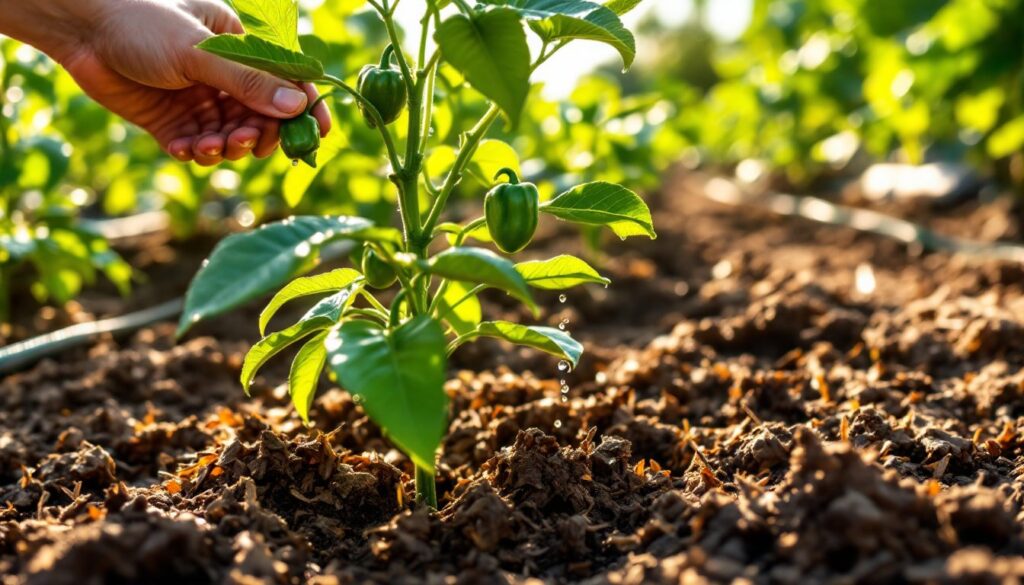
Use soil-level drip irrigation (soaker hoses, drip tape, or hand-watering at the base) to keep water off leaves and maximize soil uptake. If you hand-water, use a gentle stream, don’t blast the soil or you’ll expose roots and compact the surface.
Add 2–3 inches of organic mulch (shredded bark, straw, or wood chips) around the base of each plant, keeping mulch an inch away from the stem to prevent rot. Mulch acts as a moisture buffer, keeping soil cooler in summer and reducing evaporation by up to 30%. It also breaks down over time and improves soil structure.
Maintain consistent moisture, especially once plants flower and fruit. A moisture meter ($10–20) removes guesswork, stick it 2–3 inches into the soil and aim to keep readings between “moist” and “slightly dry.” This is far more reliable than guessing by feel. Investing in garden tools that make monitoring easier pays dividends over a season.
Water more conservatively as fall approaches and growth slows. Taper frequency to once or twice weekly by late summer. If you’re overwintering peppers indoors, reduce watering to once weekly or less, dormant plants use minimal water.
During extended dry spells or heat waves, water every morning and evening if needed. Conversely, after heavy rain, skip a scheduled watering. Let the soil dry slightly, then resume your normal routine. Your eyes and fingers are still your best sensors, trust them.