
Table of Contents
ToggleAn L-shaped kitchen layout is one of the most practical configurations for homeowners and DIYers tackling kitchen renovations or remodels. Unlike a galley or single-wall setup, an L-shaped kitchen uses two perpendicular walls, creating natural work zones and efficient traffic flow. Whether you’re planning a full kitchen overhaul or reimagining your current space, understanding how to maximize an L-shaped layout means smarter cabinet placement, better appliance positioning, and a kitchen that actually works the way you cook. This guide walks you through what makes L-shaped kitchens tick, the real benefits they offer, and the practical decisions that separate a well-planned kitchen from one that’ll frustrate you daily.
Key Takeaways
- An L-shaped kitchen layout uses two perpendicular walls to create 30–40% more counter and storage space than single-wall galley kitchens, making it ideal for efficient space utilization.
- The kitchen work triangle naturally forms along the two walls in an L-shaped design, keeping the sink, stove, and refrigerator positioned 4–6 feet apart for efficient movement and reduced cooking frustration.
- Invest in a quality corner solution ($150–$500) with pull-out shelves or rotating inserts to avoid dead zones and maximize the functional storage potential of the corner where two walls meet.
- Ensure at least 15–18 inches of counter space beside your stove and 24 inches beside your sink as dedicated prep and landing zones, which is essential for safe and practical cooking.
- Consider a peninsula rather than a freestanding island if your L-shaped kitchen has limited space, as it adds workspace and seating with less footprint than an island requiring 42–48 inches of clearance.
- Check local building codes and obtain necessary permits before moving plumbing, electrical, or structural elements in your L-shaped kitchen remodel to protect home resale value and insurance coverage.
What Is an L-Shaped Kitchen Layout?
An L-shaped kitchen layout arranges cabinetry and appliances along two perpendicular walls, forming the shape of the letter L. One wall typically runs the length of the kitchen, while the second wall extends inward, usually at a 90-degree angle. This configuration works well in rooms with an awkward footprint or limited square footage because it doesn’t waste the corner space, that dead zone where two walls meet is actually prime real estate for corner cabinets, lazy Susans, or pull-out drawers.
The key difference between an L-shaped layout and other configurations is flexibility. You get dedicated zones without eating up floor space the way an island-centric design might. A U-shaped kitchen offers more counter and storage, but an L-shaped design works better when you can’t afford to lose walkable space. Many homeowners also appreciate that an L-shaped kitchen leaves one full wall open, perfect for a dining area, pantry, or entry.
Common appliance positions in an L-shaped kitchen place the stove on one wall and the sink on the adjacent wall, with the refrigerator anchoring the corner or one end. This naturally creates the classic work triangle (more on that below) without feeling cramped.
Key Benefits of an L-Shaped Kitchen Design
Maximizing Space and Efficiency
An L-shaped kitchen squeezes usable counter and storage space from a modest footprint. By utilizing two walls instead of one, you gain roughly 30–40% more counter area compared to a single-wall galley kitchen in the same room. Corner cabinets, often a wasted eyesore, become functional storage when fitted with pull-out shelves, rotating Lazy Susan units, or corner drawers. You’re also left with an open wall, which means natural light, better ventilation paths, and room to move without feeling boxed in.
Standard dimensions help here. Most kitchen base cabinets are 24 inches deep. If your L-shaped kitchen spans 10 feet on one wall and 8 feet on the perpendicular wall, you’re looking at roughly 18 linear feet of cabinetry, far more than a single 10-foot wall. In real terms, that’s the difference between having a proper pantry and cramming everything into shelves above the fridge.
Improving Work Triangle Flow
The kitchen work triangle, the imaginary line connecting your sink, stove, and refrigerator, is a foundational design principle. An ideal triangle keeps you moving efficiently between these three workstations. In an L-shaped kitchen, the triangle naturally forms along the two walls. Your sink might sit on one wall with the stove 4–6 feet away along the adjacent wall, and the refrigerator anchors one of the corners or ends. This means short, logical movement patterns. You’re not running across the entire kitchen to grab a pan or crisper drawer.
When the triangle is too spread out (more than 26 linear feet total), or too cramped (less than 12 linear feet), cooking becomes inefficient and frustrating. An L-shaped layout virtually forces good triangle geometry because the perpendicular walls naturally limit the distances. That’s why so many L-shaped kitchens showcase successful design ideas across different home sizes, the layout itself does a lot of the heavy lifting.
Practical Design Tips for L-Shaped Kitchens
1. Plan Your Corner Carefully
The corner is where most L-shaped kitchens stumble. Don’t leave it as wasted dead space or a jumbled mess of hard-to-reach cabinets. Measure the exact corner dimensions, walls aren’t always perfectly square, and invest in a pull-out corner solution. These run $150–$500 depending on quality but save hours of frustration reaching into a blind corner cabinet. Alternatively, position your sink or a prep area at the corner itself: you lose some awkwardness if that corner is actively used.
2. Prioritize Counter Space Near Appliances
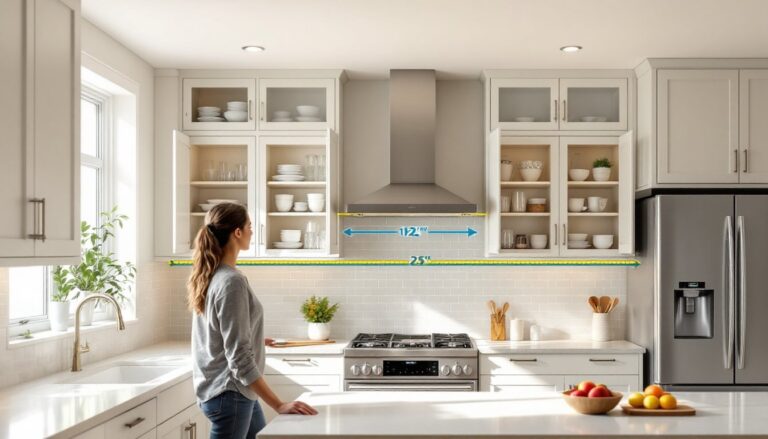
Plan at least 15–18 inches of counter space beside your stove and 24 inches beside your sink. These are landing zones where you set hot pans, prep vegetables, or load the dishwasher. A common mistake is fitting cabinets wall-to-wall without leaving breathing room. You need prep space, not just storage.
3. Evaluate Island vs. Peninsula Options
If your L-shaped kitchen’s open wall has room, a peninsula (a counter that juts into the room but connects to one wall) can add workspace and seating without eating into walkways. An island (a freestanding counter) requires more clearance, typically 42–48 inches on all sides so you can open cabinet doors and move around. If your space doesn’t accommodate that, skip the island. A peninsula does the job with less footprint. Designers at The Kitchn frequently highlight how smart peninsula placement transforms tight L-shaped layouts.
4. Install Quality Corner Lighting
L-shaped kitchens often create shadow zones at the corner where two walls meet. Recessed lighting or under-cabinet lights at the corner address this. Poor lighting makes the work triangle feel cramped and cooking less safe, you miss cutting hazards if you’re working in shadow.
5. Leave the Open Wall Open
Many homeowners instinctively fill the open wall with more cabinets. Resist this. That wall is valuable for dining, a pass-through, or simply breathing room. If you need extra storage, add a tall pantry cabinet on one end, but keep the middle open. An open wall also helps light and air circulation, making a smaller kitchen feel larger.
Common Mistakes to Avoid
Undersizing the Corner Cabinet or Ignoring It Entirely
Corner cabinets in L-shaped kitchens are notorious dead zones. If you don’t plan pull-out shelves, rotating inserts, or at least a blind corner with an angled door, you’ll lose valuable storage and struggle to access anything at the back. Budget $200–$400 for a quality corner solution: it’s money well spent.
Placing the Sink in the Corner
While tempting for space efficiency, sinking your sink into the corner makes plumbing awkward and leaves you with poor sightlines into the rest of your kitchen while washing dishes. Put the sink on one wall with at least 24 inches of clear counter on each side. This also keeps the window view front-and-center if that corner has an exterior wall.
Ignoring Appliance Placement
Think hard about where you place your refrigerator before you lock in cabinetry. A fridge at the end of one wall works best: a fridge in the middle of the longest wall blocks the work triangle. Similarly, avoid nesting your stove in a corner where cabinets on both sides become a heat and safety hazard. You need at least 15 inches of clear counter on the wall beside the stove, not windows or corner cabinetry.
Skipping the Permit When You Should Get One
If your L-shaped kitchen remodel involves moving plumbing, electrical, or load-bearing walls, you need a permit. Local building codes (IRC, International Residential Code, dictates most residential kitchen layouts) require permits for structural changes and rough electrical/plumbing work. Check with your local building department. Unpermitted work can affect home resale value and insurance claims.
Underestimating Prep Work
Existing walls may not be perfectly straight, especially in older homes. Before you order $8,000 in cabinetry, measure twice and account for ±½-inch variance. Many DIYers install cabinets and find out mid-project that the wall bows or dips. Use a laser level or a straightedge to check wall flatness. If the variance is more than ½ inch over 10 feet, you may need to shim cabinets (adjusting with thin wedges) or, in severe cases, call a professional. Resources like Remodelista’s curated L-shaped kitchen examples show kitchens that work because the fundamentals, measurements, wall prep, and alignment, were handled right.
Conclusion
An L-shaped kitchen layout is a practical, proven design that works for homeowners at every skill level. It balances efficient workflow, usable storage, and flexible use of floor space. The key to success is respecting the corner, prioritizing counter space, and leaving the open wall purposeful rather than cramped. Plan carefully, measure twice, and don’t skip the permitting conversation if your remodel involves structural or rough-in work. A well-executed L-shaped kitchen pays dividends for years to come.