Table of Contents
ToggleGrease buildup on your range hood filter doesn’t just look dingy, it kills airflow and makes your kitchen smell like last week’s dinner. A clogged filter means your range hood can’t vent smoke, steam, and cooking odors efficiently, forcing your HVAC system to work harder. The good news? Cleaning a range hood filter is one of the easiest maintenance tasks you can tackle yourself. Most homeowners can finish the job in under 30 minutes with basic household items. This guide walks you through the process, explains how often you should clean yours, and shares pro tips to keep the job from becoming a headache.
Key Takeaways
- Cleaning your range hood filter every 2–4 weeks prevents grease buildup, improves airflow, and eliminates cooking odors while reducing fire hazards in your kitchen.
- Most homeowners can clean a range hood filter in under 30 minutes using basic household items like hot water, dish soap, and a soft-bristled brush.
- For stubborn grease, use a baking soda paste or commercial degreaser, but avoid wire brushes and harsh chemicals that damage the filter mesh.
- Hold your filter up to light every two weeks—if you can’t see through the mesh clearly, it’s time to clean to maintain optimal hood performance.
- If your range hood filter is bent, has holes, or restricts airflow even after cleaning, replacement is necessary and filters typically cost $15–$50.
- Setting a monthly reminder and keeping cleaning supplies under your sink makes regular maintenance quick and easy, extending your range hood’s lifespan.
Why Regular Range Hood Filter Cleaning Matters
Your range hood filter traps cooking fumes, grease particles, and moisture before they recirculate through your kitchen and home. Over time, that greasy residue accumulates and restricts airflow, kind of like trying to breathe through a coffee filter. When your filter clogs, several things happen: the hood runs louder as it works harder to pull air, cooking odors linger instead of venting out, and grease can start backing up into the ductwork or recirculating into your space.
Beyond comfort, a dirty filter creates a fire hazard. Accumulated grease is flammable, especially in the presence of high heat from your stovetop. Building codes recognize this risk, which is why range hoods are required equipment in most kitchens. Regular cleaning keeps the system functioning safely and efficiently. It also extends the lifespan of your range hood motor, saving you money on eventual replacement.
What You’ll Need Before You Start
Most range hood filters can be cleaned without special tools or expensive cleaners. Here’s what to gather:
Materials:
• Hot water and a sink or large basin (bathtub or outdoor bucket work too)
• Degreaser (dish soap, all-purpose kitchen degreaser, or baking soda paste)
• Baking soda (optional but highly effective for stubborn grease)
• Paper towels or old rags
• Optional: rubber gloves to protect your hands from hot water and degreaser
Tools:
• Soft-bristled brush or old toothbrush (avoid wire brushes: they can damage filter mesh)
• Sponge or non-scratch cleaning pad
If you’re tackling heavy grease buildup, a commercial oven or kitchen degreaser works faster than dish soap alone. Whatever method you choose, avoid harsh solvents or abrasive scrubbers, they’ll damage the filter mesh. Wire brushes, steel wool, and caustic chemicals can compromise the filter’s effectiveness and shorten its life.
Step-By-Step Instructions For Cleaning Your Filter
Step 1: Turn Off the Range Hood and Let It Cool
Switch off your range hood and give it a few minutes to cool. Grease is easier to remove when warm (not hot), and you want to avoid burns.
Step 2: Remove the Filter
Most range hood filters slide or click out from underneath the hood. Check your manual if you’re unsure, but typically you’ll push up or pull down on a catch or button. Some filters are held by a single screw: unbolt it and set the screw aside where you won’t lose it.
Step 3: Pre-Soak (Optional but Recommended)
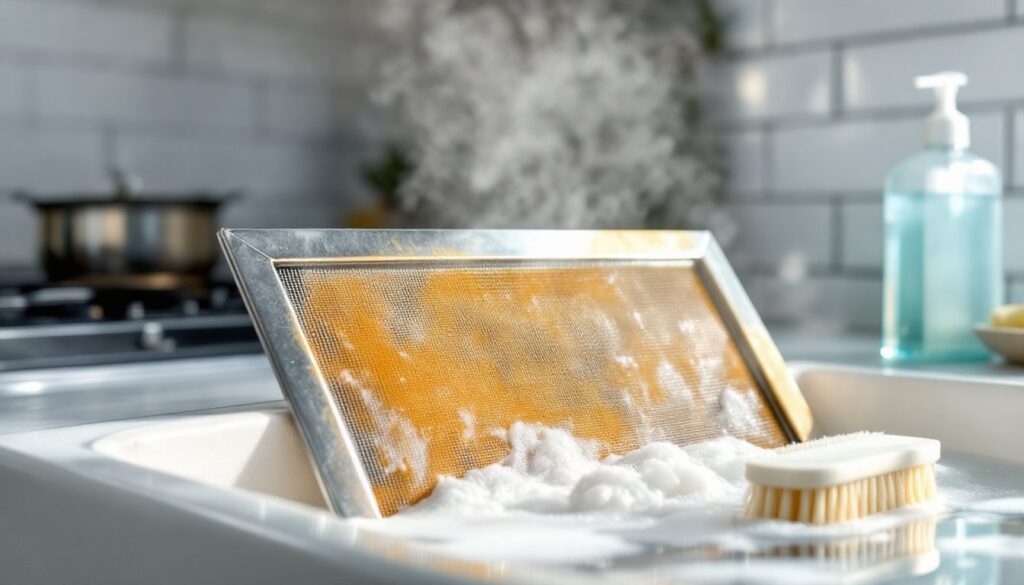
Fill your sink or basin with hot (not boiling) water and add a few drops of dish soap or a commercial degreaser. Let the filter soak for 10–15 minutes. This loosens hardened grease and makes scrubbing easier. Skip this step only if the filter isn’t heavily soiled.
Step 4: Scrub Away Grease
Using a soft-bristled brush or sponge, gently scrub both sides of the filter under running hot water. Work in sections, paying special attention to the areas with the heaviest buildup. For stubborn spots, sprinkle a little baking soda on the brush, it’s mildly abrasive and deodorizing without damaging the mesh.
Step 5: Rinse Thoroughly
Run the filter under hot running water from multiple angles to flush out all soap and loose grease particles. Tilt and turn it so water reaches every section of mesh. A clean filter should drain water freely without pooling.
Step 6: Dry and Reinstall
Pat the filter dry with paper towels or a clean cloth. Let it air-dry for a few minutes if you have time. Once dry, slide or click the filter back into the hood, making sure it’s seated evenly.
Choosing Between Cleaning Methods
You have three main approaches, each suited to different levels of buildup:
Dish Soap and Hot Water (Best for light-to-moderate grease)
Simple, safe, and uses products you already have. Works well on filters cleaned regularly.
Baking Soda Paste (Best for moderate-to-heavy buildup)
Mix baking soda with a little water to form a thick paste, apply to the filter, let sit for 5 minutes, then scrub. Resources like Good Housekeeping’s range hood filter guide detail this method and others.
Commercial Degreaser (Best for heavy, baked-on grease)
Products made specifically for kitchen grease cut through stubborn buildup faster. Follow product instructions carefully and use in a well-ventilated area. This approach is overkill for routine maintenance but worth it when you’ve let cleaning slide for several months.
How Often Should You Clean Your Range Hood Filter?
Your cleaning schedule depends on how much you cook and what you cook. If you’re a light cook or rent an apartment with a small kitchen, monthly cleaning is fine. If you’re frying, sautéing, and roasting several times a week, clean it every 2–3 weeks.
A simple rule: inspect the filter every 2 weeks. Hold it up to the light. If you can’t see through the mesh clearly, it’s time to clean. Some people forget until the hood starts sounding like a jet engine or cooking odors hang around, by then, the filter is overdue.
If you’re the type to procrastinate (we’ve all been there), set a phone reminder for the 15th of each month. It takes 20 minutes, beats a $300 range hood replacement, and keeps your kitchen smelling fresh.
Pro Tips To Make Cleaning Easier
Clean More Frequently
The single best tip is this: don’t wait until grease hardens into a crusty layer. A weekly or biweekly rinse takes 5 minutes and prevents the need for heavy scrubbing later.
Use Your Dishwasher (Sometimes)
Many modern range hood filters are dishwasher-safe, check your manual first. If yours qualifies, toss it on the top rack with your regular wash. The hot water and detergent do the work for you. But, older filters or those with aluminum frames may not survive the heat or water pressure, so verify compatibility before trying this.
Keep Cleaning Supplies Handy
Store dish soap and a soft brush under the sink near your range hood. Removing friction, not having to hunt for supplies, makes you more likely to clean regularly.
Understand When Replacement Is Needed
Even with regular cleaning, filters eventually wear out. If yours is bent, has holes in the mesh, or comes clean but still restricts airflow, replacement is your next step. Filters typically cost $15–$50 depending on size and material. Standard 6-inch by 10-inch mesh filters fit most residential range hoods, but measure yours first. Bob Vila’s guide explains when cleaning no longer cuts it and replacement becomes necessary.
Consider a Capture Layer (Optional Upgrade)
Some homeowners place a disposable grease filter (like the kind sold at The Kitchn and other retailers) in front of the main mesh filter. The Kitchn and similar kitchen resource sites recommend this for heavy cooking. These cheap, replaceable screens catch the bulk of grease, keeping your main filter cleaner longer. You toss the disposable layer and deep-clean the main filter less often, a smart move if you fry or wok regularly.
Conclusion
Cleaning your range hood filter is straightforward, cost-free, and a genuine lifesaver for your kitchen’s air quality and safety. A few minutes of soaking, scrubbing, and rinsing every 2–4 weeks keeps your hood running quietly, your kitchen smelling fresh, and your system out of danger. Set a reminder, keep supplies close, and tackle it before grease builds up. Your range hood, and your kitchen, will thank you.